


May
Molecular shuttle slides into the solid state

The rotaxane sits between links within the metal-organic framework
Such a bottom-up approach to nanotechnology was first proposed by Richard Feynman in his 1959 lecture, There’s plenty of room at the bottom. Nanotechnology has since grown into a large scientific enterprise, with many in the community attempting to replicate macroscale devices on the atomic scale.

© NPG`
Kelong Zhu and his colleagues at the University of Windsor have overcome this obstacle by inserting a rotaxane into a MOF between two of the framework’s struts. The shuttle is made up of a crown ether macrocycle and two benzimidazolesites, which act as the destinations. The researchers argue that this arrangement provides a regular and coherent motion between two MOF struts – a property that is hard to achieve in solution.
April
Ionic liquids come up smelling of roses

Water triggers fragrance alcohols to be released from the ionic liquid matrix
Fragrance alcohols are typically volatile, so their scent can be lost soon after a perfumed product is applied. A lot of research has been dedicated to finding ways to keep scents around for longer.
Critically, the perfume’s rate of release in this study, led by Nimal Gunaratne of the Queen’s University Ionic Liquid Laboratories (QUILL) in Belfast, is dependent on the water concentration. So by controlling the moisture level, the fragrance can be released over several hours – keeping the scent around all day.
Gunaratne highlights that this prolonged release is a key advantage of this system. Although it is early stages, the researchers describe it as ‘an exciting breakthrough’ and are hoping to develop the work further.
One potential application is deodorants, where sweat could provide the necessary moisture. The group have also found that thiols – one component of sweat responsible for its odour – can also trigger the fragrance release. In doing so, the thiol compounds become tagged to the ionic liquid and lose their pungency. This means that in addition to releasing a fresh fragrance, the unpleasant smell of sweat could be simultaneously removed, in a two-pronged attack against body odour.
Christian Quellet, a fragrance delivery expert and consultant with Leugos Sàrl in Switzerland, believes this approach is a promising step in the development of new fragrances. ‘The chemistry involved is innovative, quantitative and atom economical,’ he says.
March
The future of rare earth recycling
Companies are scrambling to find ways to reuse costly rare earth elements
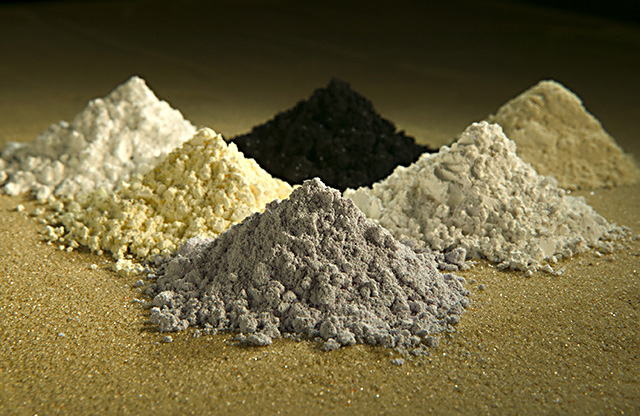
Rare earth elements like these are used in a wide variety of technologies, from magnetic resonance imaging to fluorescent lighting. Clockwise from top left: gadolinium, praseodymium, cerium, lanthanum, neodymium and samarium. [Image credit: Wikimedia Commons]
What do a smartphone, a hybrid car and a Tomahawk cruise missile have in common? They won’t work without obscure rare earth elements. Scarce materials like europium, neodymium and others are now so in demand that companies and governments are urgently considering unlikely places to mine them, including deep under the sea and, someday, even asteroids.
But there’s another option that has been getting a lot of attention lately: recycling. While there are many challenges ahead, some experts think that recycled rare earths from scrap materials and discarded products may eventually be able to meet up to 40 percent of global demand. That could be a boon for the U.S. and other Western nations, since China now dominates the world market for rare earths and can effectively control their supply and price.
The thing about rare earths is that they aren’t especially rare. Even the two scarcest, thulium and lutetium, are almost 200 times more abundant than gold. Yet the rare earths are difficult to mine because they’re spread out within the Earth’s crust.
“Rare earths are the pepper and salt in many new technological applications,” says Koen Binnemans, a rare earth scientist at the University of Leuven in Belgium. “There are a few applications where no other elements can do the job.”
These metals are valuable because they each have distinctive — and rare — qualities. Neodymium and samarium, for example, are strong magnets, making them crucial for computer hard drives and headphones. Cerium is a powerful catalyst used as an additive to diesel fuel. Europium and terbium are needed for fluorescent light bulbs.
As the demand for rare earths has risen, countries have scrambled to get their share. Right now, China exports more than 80 percent of the world’s supply.
But as people in China move up the economic ladder, they and their families want the same kinds of consumer devices that we have, says Jim Sims, a representative of Molycorp, the only company in the U.S. that mines rare earths. “That alone is driving increased demand.” In July 2010, China decreased its rare earth exports by 70 percent and prices soared. Costs have stabilized since then, but rattled nations are urgently looking beyond China for the valuable metals.
“People in [Washington] D.C. for sure at some point woke up and said, ‘Gee, we like magnets and fluorescent lights and batteries and oh boy, all of this stuff we need is coming from China. We better do something about it,’” says Corby Anderson, who teaches metals mining and engineering at the Colorado School of Mines. As a result, the U.S. Department of Energy announced last year that it was starting theCritical Materials Institute at the Ames Laboratory in Iowa to tackle the issue.
In 2010, Molycorp reopened its rare earth mine in Mountain Pass, Calif., which had closed down in 2002. Other mining companies, meanwhile, are looking for potential new mine sites around the world. Some of those sites may even be several miles underwater, near hydrothermal vents at the bottom of the ocean — an idea several companies are seriously considering. An even more far-out idea is to explore the moon and asteroids for rare resources. Companies like Planetary Resources are already raising money and someday hope to mine the skies.
While these unconventional ideas are getting most of the attention, some researchers are focusing on less flashy but likely more practical ways of procuring rare earths: by recycling the metals from scrap and thrown-away products such as used cell phones and fluorescent bulbs. Despite all the recycling research now underway, less than one percent of all rare earths were recycled in 2011. Scientists haven’t yet figured out how to efficiently recapture the elements.
“Recycling is in its infancy,” says Colorado’s Anderson. “Sometimes the challenges you face are more formidable than primary production.”
Breaking down highly engineered products like cell phones requires extra labor and extra chemical steps to isolate the rare earths, adding to the cost. And each technology requires a different recycling technique — what separates terbium from light bulbs won’t isolate neodymium from a hard disk drive.
Another consideration is that rare earths aren’t the only materials worth recapturing. “You have to develop special methods for each application so not only do you recycle the rare earths but the other valuable metals that are present,” says Belgium’s Binnemans. “Too often, people from academic research are too focused on getting just rare earths back, but that is the wrong approach.” One of the reasons why rare earth recycling is only now starting is that past efforts focused on recovering expensive metals like gold and copper and ignored the once cheaper rare earths.
For now, the most promising recycling process may be obtaining rare earths from fluorescent light bulbs. In Europe, consumers are required to recycle bulbs because they contain mercury, so recycling companies have immediate access to the materials. Solvay, a chemical and plastics company based in Belgium, has already begun to extract six separate rare earth elements from fluorescent bulbs and has recycled more than 1,000 tons of product, according to Frederic Carencotte, who heads the rare earth division at Solvay. To recycle the bulbs, workers at Solvay separate the rare earths from everything else. Next, they isolate each one and recombine them to make a fluorescent precursor that they sell back to lamp manufacturers.
Other companies are looking beyond bulbs in their quest for recycled material. Around 20–30 percent of rare earths used in magnet production end up as scrap waste, so companies are beginning to collect the scrap to reuse it. In addition, a Chinese research team recently used nanoparticles to capture more than 85 percent of the rare earths from wastewater. But Colorado School of Mines’ Anderson suggests the Chinese results aren’t a breakthrough: the hard part is to separate rare earths from each other, not merely to capture them.
Since hybrid cars require rare earths in their batteries, companies such as Honda and Toyota are working hard to recycle them and cut battery prices. Recycling “could be the winning weapon to excel in the global car market,” says Marcello Ruberti, a rare earths economist at the University of Salento in Italy. Separating rare earths from cell phones, on the other hand, is more difficult and costly because the parts are so small that it requires a lot of labor to take the phones apart.
In the long run, recycling may not only prove to be an economic boon, but also a plus for public health and the environment. Rare earth ores almost always include a small amount of radioactive material, such as uranium and thorium. In 2004, researchers published the results of a 20-year study on workers from the Baiyun Obo Mine in China. They found that thorium exposure over a long period of time caused a higher incidence of lung cancer. With recycling, however, the radioactive materials would already be removed when workers handle the metals.
Binnemans, the Belgian researcher, thinks companies could recycle more than 40 percent of the rare earths in fluorescent lights. Other products, such as car batteries and industrial scrap, could follow if recycling technologies continue to improve. But it’s unlikely that the world’s ever-increasing hunger for rare earth metals could ever be fully satisfied with recycled material. “I think it’s unrealistic to think that 80 to 90 percent of rare earths will be recycled. But I would be happy if we could have an average of recycling more than 10 percent,” says Binnemans.
“That would be a huge progress compared to what we have at this moment.”
http://scienceline.org/2014/03/the-future-of-rare-earth-recycling/
February
Exploiting the Chirality of DNA

DNA covalently bound to cellulose offers new perspectives in asymmetric catalysis © Shutterstock
DNA has emerged as an innovative way of controlling the chirality of a reaction product; by binding catalysts in such a way that one enantiomer is preferentially generated. The chiral nature of the helix makes it ideal for asymmetric catalysis. However, this field of research is still in its infancy: reactions are usually run on very small scales, usually in the milligram region, and are difficult to scale-up without using vast amounts of DNA. Now,Stellios Arseniyadis, of ESPCI ParisTech,Michael Smietana, of the University of Montpellier II, and their colleagues have come up with a straightforward solution that allows the catalyst to be recycled – by using DNA covalently bound to cellulose. In fact, cellulose-supported calf thymus DNA is commercially available.
The catalyst, in this case a copper–bipyridine complex, is intercalated into cellulose-supported DNA. The cellulose is packed into a low pressure chromatography column and reactants are simply passed through. Reactions can be performed continuously, and give high yields and high levels of enantioselectivity. Aside from its reusability, other advantages of the system include its biocompatibility, robustness and ease of use.

The team used this system to carry out a series of nucleophilic addition reactions
The team hope organic chemists will start thinking of DNA as part of their synthetic toolbox. ‘People think DNA is more likely to be used by biologists, rather than chemists. As chemists, we would like to think this large biomolecule could be used as a chiral scaffold’.
Sabine Müller of the Ernst Moritz Arndt University Greifswald in Germany, whose research focuses on RNA catalysis, is excited by the progress being made in this area. ‘The application of a DNA-based catalyst linked to cellulose allows new technical solutions and will further enhance the prospects of DNA-based asymmetric catalysis,’ she says.
‘There is still a lot to do,’ says Arseniyadis. ‘Nonetheless, DNA-based asymmetric catalysis is likely to become a fantastic tool for synthetic organic chemists who will be able to choose the appropriate DNA-hybrid catalyst for one specific transformation.’
Top Researchers and Research Centers of
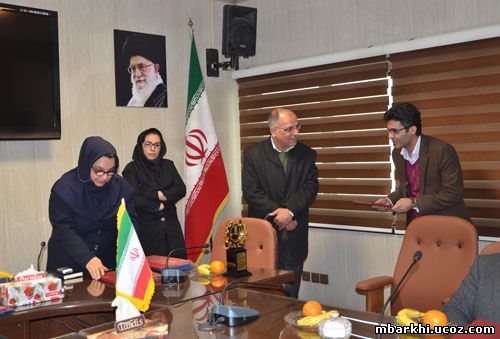
تجلیل از پژوهشگران برتر سازمان زمینشناسی و اکتشافاتمعدنی کشور
به گزارش روابطعمومی سازمان زمینشناسی و اکتشافاتمعدنی کشور، از پژوهشگران برتر سازمان زمینشناسی و اکتشافاتمعدنی کشور در بخشهای مختلف تجلیل به عمل آمد. بر اساس این گزارش، طرحهای پژوهشی مراکز تهران و استانی از مهر ماه سال گذشته تا مهر ماه امسال توسط هیات داوران مورد بررسی قرار گرفت و در بخشهای پایاننامه برتر، طرحهای پژوهشی برتر، اختراع برتر، سازمان پژوهشی برتر، پژوهشگران برتر از معاونتهای زمینشناسی و اکتشاف، ویراستار گزارشهای زمینشناسی انتخاب و معرفی شدند.
بر همین اساس اسامی منتخبان برتر سازمان زمینشناسی و اکتشافاتمعدنی کشور به شرح زیر اعلام و طی برگزاری نشستی از آنها تجلیل به عمل آمد:
خانم مهوش داوری برای کتاب برتر در شاخه ترجمه (کانیشناسی نوری، اصول و تمرین)
خانم فرنوش فرجندی بهعنوان پژوهشگر برتر حوزه معاونت اکتشاف
آقایان ایمان پرتوآذر و حبیب علیمحمدیان به عنوان پژوهشگران برتر حوزه معاونت زمینشناسی
خانم آذر محمدی پژوهشگر شایسته تقدیر برای طرحهای نوین کاربردی در زمینه ژئوتوریسم و اکوتوریسم
آقای سید افشین مجیدی به عنوان پژوهشگر برتر حوزه مدیریت نظارت و ارزیابی
خانم نجمه داوری برای طرح پژوهشی شایسته تقدیر با عنوان بررسی املاح و نمکهای اقتصادی دریاچه ارومیه با همکاری آقای سرمد روزبه و خانم راضیه لک
آقای رضا بهبهانی به عنوان طرح پژوهشی شایسته تقدیر برای طرح بررسی پراکندگی مواد آلی رسوبات بستر بخش شمالی خلیجفارس با همکاری خانم راضیه لک
آقای فریبرز قریب برای مرکز زمینشناسی برتر از مرکز پژوهشهای کاربردی علوم زمین کرج
آقای علامرضا حسینیار به عنوان طرح پژوهشی برتر با عنوان چینهنگاری لرزهای رسوبات آبراه شمال جزیره قشم با همکاری آقای رضا بهبهانی و خانم راضیه لک
خانم محبوبه پرورش برای نوآوری در طرح پژوهشی برتر با عنوان مطالعات ژئوشیمی منطقه کاشمر-بروسکن با نگرش ویژه بر ژئوبوتانی و گیاهان داروئی
آقایان مرتضی طاهرپور خلیل آباد به عنوان پژوهشگر شایسته تقدیر و همچنین فرخ قائمی به عنوان پژوهشگر برتر مرکز زمینشناسی و اکتشافاتمعدنی منطقه شمال شرق (مشهد)
خانمها معصومه خلج معصومی و سمیه ویسه به عنوان پژوهشگر برتر مرکز پژوهشهای کاربردی علوم زمین کرج
آقای محمد برخی پژوهشگر برتر مرکز پژوهشهای کاربردی علوم زمین کرج در ارائه طرحهای خلاقانه و ثبت اختراع
خانم عاطفه نیمروزی به عنوان پژوهشگر برتر مرکز زمینشناسی و اکتشافاتمعدنی منطقه جنوب کشور(شیراز)
خانم راضیه لک پژوهشگر برتر
و خانم نازنین بدری کللو برای رساله پژوهشی برتر
نمرات ميانترم درس شيمي پيش دانشگاهي
|
نام خانوادگی |
نمره برگه |
نمره از 6 |
|
کارگر |
0.5 |
0.29 |
|
امجدیان |
1 |
0.57 |
|
نوری |
3.5 |
2.00 |
|
پیرنیا |
4.5 |
2.57 |
|
اسلامی |
5 |
2.86 |
|
طاهریان |
6 |
3.43 |
|
شمس |
6 |
3.43 |
|
میرزانیا |
6 |
3.43 |
|
برخورداری |
6 |
3.43 |
|
زنوزی |
6 |
3.43 |
|
نصیری |
7 |
4.00 |
|
سعیدی |
7.5 |
4.29 |
|
زند امیر |
7.5 |
4.29 |
|
سلمانزاده سپیده |
8 |
4.57 |
|
صادقی |
8 |
4.57 |
|
عبدی |
8 |
4.57 |
|
زند زهرا |
9 |
5.14 |
|
سلمانزاده سحر |
9.5 |
5.43 |
|
آقایی |
10.5 |
6.00 |
|
میانگین کلاس |
3.59 |

